Reading a Laundromat Natural Gas Utility Bill

Last reviewed 2026-09-12 by Jaken Energy editorial desk. Next review scheduled 2027-03-12.

Direct answer

Laundromat gas bills bill therms consumed, plus delivery and sometimes commodity components. One therm equals 100,000 BTU per DOE. Gas dryers dominate use—California IOU testing averaged 0.36 therm per 30-pound load. Compare therms to load counts, verify meter index and billing period, and separate regulated delivery from supply/marketer charges where your state allows gas choice.

Cited: [1] U.S. Department of Energy · [2] U.S. Department of Energy · [3] Coin Laundry Association · [4] Coin Laundry Association · [5] Railroad Commission of Texas

Keep these

Key takeaways

  • Therms are the primary consumption unit; multiply by your effective rate to compare months.
  • Gas dryers—not space heat—usually drive therms at a coin laundry when drying is gas-fired.
  • California IOU CASE data modeled 732 therms per year for one 30-pound gas dryer at 5.52 loads per day.
  • Texas regulates gas through LDCs under the Railroad Commission; there is no statewide gas marketer choice like electric REP switching.
  • Atlanta-area laundromats may see AGL gas marketer charges layered on LDC delivery—verify both sections.
  • Keep one to three years of gas bills for due diligence alongside electric history.

Where gas shows up in a laundromat

When dryers and water heaters burn natural gas, the meter records fuel volume converted to therms. California IOU test work on a 30-pound gas dryer found an average of 0.36 therm per load and 0.35 kWh per load for electrical components—96.8% of that dryer's energy from gas. Modeling 5.52 loads per day yields about 732 therms per year for a single 30-pound unit, a useful order-of-magnitude check against your bill.

Water heating may be gas or electric. DOE places water heating at about 50% of commercial laundry primary energy category-wide; if your store heats water with gas, washer cycles add therms beyond dryers. Long operating hours—CLA's 2024 survey mean of 16.6 hours per day—extend the window when burners run.

Bill sections: meter read through total due

Most LDC bills open with account identifiers and the billing period. The meter read section shows previous index, current index, and sometimes a pressure or temperature adjustment converting CCF or MCF to therms. A customer or service charge is a fixed monthly fee. Delivery charges recover pipelines and local mains; commodity or gas cost sections reflect fuel itself where unbundled.

In Georgia's Atlanta Gas Light framework, marketers may appear as a separate supplier line while AGL handles delivery infrastructure—a pattern distinct from a single bundled municipal bill.

Typical commercial gas bill line items
Line itemMeaning for laundromats
Therms usedTotal gas energy consumed in period
Commodity / gas costFuel portion when unbundled
Delivery / transportationRegulated LDC pipeline and distribution
DDDC or capacity tagPeak-day or design-day allocation on some LDC tariffs
Taxes and ridersState/local levies and tariff surcharges

Sanity-check formula without inventing your rate

Use sourced per-load data to test whether billed therms are plausible—not to predict exact dollars without your tariff.

Estimated therms from dryers ≈ (number of gas dryers) × (loads per dryer per day) × (days in bill) × (therms per load from equipment spec or test data).

California IOU testing provides 0.36 therm per load for a 30-pound gas dryer as a benchmark. Adjust downward for smaller capacity or lower gas input, upward for larger tumblers, always labeling assumptions.

Divide total billed therms by estimated dryer therms; a large unexplained gap may mean water heating, space heat, leaks, estimated reads, or a misread meter.

Supply versus delivery on gas bills

Procuring gas supply—choosing a marketer or contract—is separate from reducing therms through efficient dryers or shorter idle pilot settings. Delivery remains regulated; in Texas the Railroad Commission oversees gas LDCs and marketers must register, but statewide choice programs differ from ERCOT electric REP selection.

When comparing bills month to month, hold delivery rate changes separate from commodity spikes tied to index markets.

Monthly gas bill checklist

Work through this list before disputing or rebidding supply.

  • Match meter serial to physical meter at pad or riser.
  • Confirm billing period aligns with your reported revenue weeks.
  • Note actual versus estimated read codes.
  • Compare therms per day to same month prior year.
  • Flag new riders, weather normalization, or balancing charges.
  • Archive PDFs with account number for CLA-style due diligence packets.
Q & A

How many therms should one gas dryer use per month?
California IOU CASE modeling used 0.36 therm per load on a 30-pound gas dryer with 5.52 loads per day, yielding about 732 therms per year—roughly 61 therms per month for that single machine. Your fleet count, load mix, and burner efficiency will differ; use the formula with your measured or spec-sheet therms per load rather than a national average.
Can laundromats switch natural gas suppliers like electricity in Texas?
Texas electric customers in ERCOT TDU territories must choose a REP, but gas is LDC-regulated under the Railroad Commission without a parallel statewide gas marketer choice program. Some other states unbundle gas commodity; Georgia uses an AGL marketer model in the Atlanta area. Check your bill header and state commission rules before assuming you can switch.
What is the difference between CCF and therms on my bill?
CCF is hundreds of cubic feet of gas volume; therms measure energy content. Utilities apply heat content and pressure factors to convert volume to therms. DOE defines one therm as 100,000 BTU. Always compare bills using therms, not raw CCF, unless you apply the same conversion factor the LDC uses.

Sources

  1. Energy Units: ThermU.S. Department of Energy

    Supports: 1 therm = 100,000 BTU

  2. California IOU CASE 2013 Gas Dryer TestU.S. Department of Energy (2013)

    Supports: 0.36 therm per load; 732 therms/yr modeled

  3. CLA Member Survey 2024Coin Laundry Association (2024)

    Supports: Mean 16.6 operating hours per day

  4. CLA Due Diligence ResourcesCoin Laundry Association

    Supports: Request 1–3 years of utility bills

  5. Texas RRC Gas ServicesRailroad Commission of Texas

    Supports: Texas gas LDC regulation

  6. Commercial Laundry Energy UseU.S. Department of Energy

    Supports: Water heating share of laundry energy

Related guides

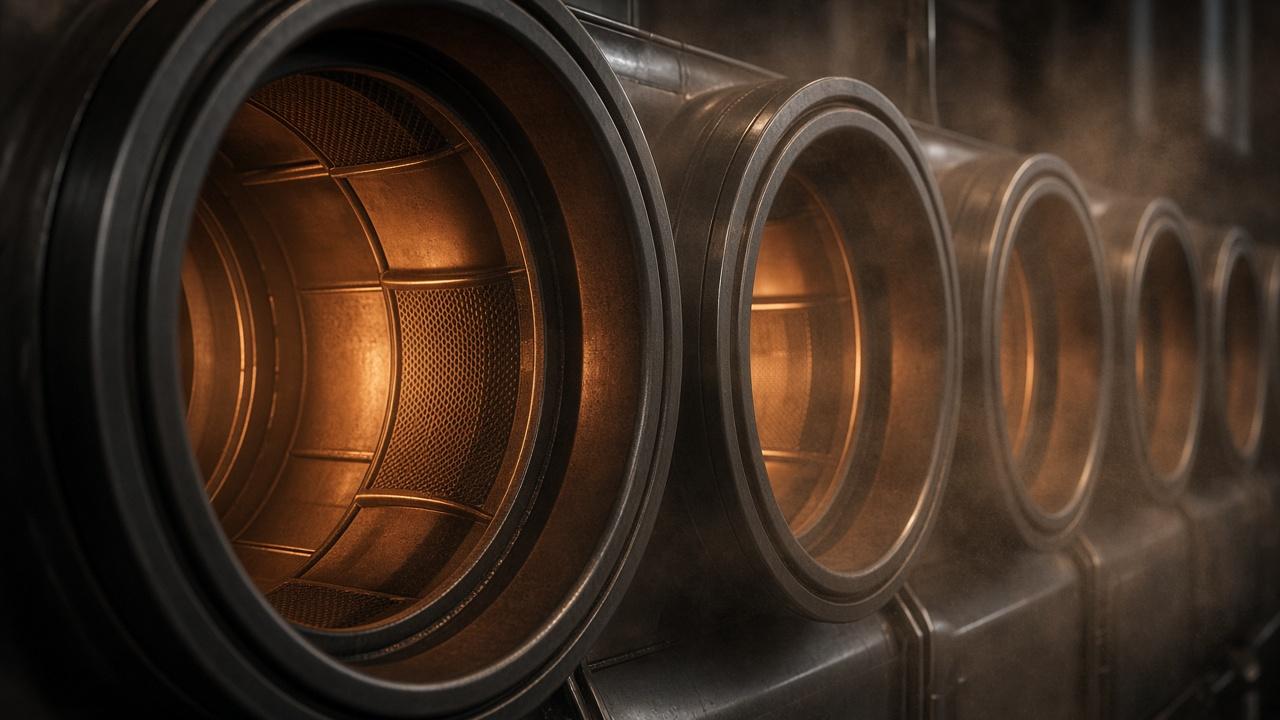
Row of commercial dryer drum openings with a warm heat glow.

Owner desk

Need help reviewing your bills or quotes?

Share your utility territory and contract timing. We provide independent supply-side guidance where your market allows—not utility sales or guaranteed savings claims.